Cracked surfaces, deteriorated edges, and damaged areas appear in multiple locations.
Photos show exterior conditions. The extent of concealed damage requires inspection.
Assessing the damage • Replacement options • What this could cost
Discussion · No spending approval requested today
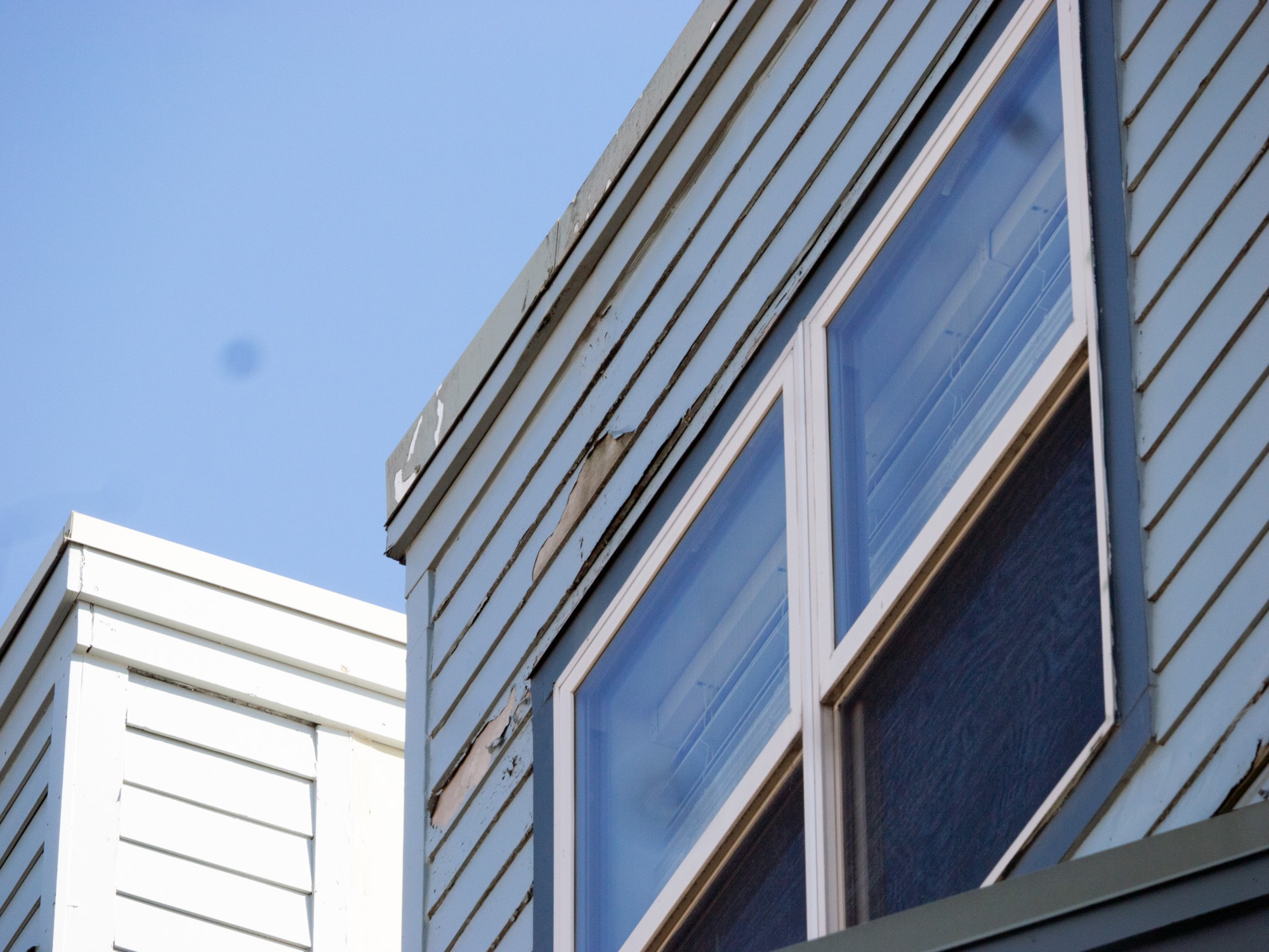
Cracked surfaces, deteriorated edges, and damaged areas appear in multiple locations.
Photos show exterior conditions. The extent of concealed damage requires inspection.
Paint helps protect sound, dry siding. When the siding itself is deteriorating, a new coating does not restore it or fix the water-management details behind it.
| Repainting damaged siding | Replacement with proper repairs |
|---|---|
Renews the surface coating; separated layers and deteriorated boards remain unless repaired or replaced. | Replaces failed siding with sound material and a new finish. |
Does not expose the wall behind the siding. | Allows inspection and repair of concealed damage after removal. |
Does not, by itself, correct hidden flashing or drainage problems. | Creates an opportunity to integrate the moisture barrier and flashing and improve vulnerable ledge details. |
The benefit: address damaged materials and water pathways together, rather than paying to refinish material that is already failing.
Replacement costs more upfront and still needs maintenance. Its durability depends on material choice, installation, and correcting moisture sources. The contractor estimate shared with us is that repainting may buy roughly 3 years; that is not a guarantee.
References: Sherwin-Williams: deteriorated or swollen siding ↗ · DOE / PNNL: wall drainage and flashing ↗
Contractor observation: projecting ledges collect water and debris and are recurring points of failure.
Proposed approach: a similar look, with recessed transitions and flashing instead of exposed projecting ledges.
The siding is believed original to 2007. The contractor suspects it is not Hardie board and reports that the textured, primed face was installed inward. The original product may no longer be identifiable.
Recommended materials to explore: James Hardie fiber cement siding.
James Hardie lists a 30-year, non-prorated siding warranty; warranty coverage is not a service-life guarantee. Confirm the selected product’s terms, finish, installation requirements, and maintenance plan with the contractor. Final products and appearance remain a homeowner decision.
References: James Hardie warranty overview ↗ · Sherwin-Williams repainting guidance ↗
Ballpark per building of 5 units
$30k–$40k per unit as an equal-share illustration.
Included: removal, disposal, moisture barrier, flashing, trim, painting, large equipment rental to accommodate building height, and minor hidden-damage allowances. Excluded: gutters and fascia/metal trim at rooflines and rooftop decks. Allowance amounts and overage terms still need definition. Individual bills may differ based on unit size and discovered repairs.
Local published examples suggest roughly $20,000–$30,000+ for replacement siding on a comparable-sized home. These are budgeting comparisons, not a verified local average.
| Comparison | Published cost |
|---|---|
| Premium siding on a typical 2,000 sq ft home Precise Exteriors · Boise guide (2026) ↗ | $18,000–$25,000+ |
| Fiber cement, assuming 2,000 sq ft of exterior siding Siding Pros of Idaho · $11–$16/sq ft (2023) ↗ | $22,000–$32,000 |
| Our five-unit building quote, divided evenly Treasure Valley Exteriors · preliminary ballpark | $30,000–$40,000 / home |
Why height matters: Our buildings are approximately 35–42 feet tall. Working at this height requires specialized access equipment and additional labor, so typical-home siding prices are useful context but aren’t a direct comparison. Our preliminary quote includes equipment rental for building height.
Our quote includes removal, disposal, moisture barrier, flashing, trim, painting, large equipment rental to accommodate building height, and minor hidden-damage allowances; excludes gutters and fascia/metal trim at rooflines and rooftop decks. Published guides may cover different scopes. Living area does not equal siding area, especially for attached homes. Final costs depend on materials, exterior area, detailing, and repairs.
Per the contractor discussion relayed to us. Confirm scope, cost allocation, and weather/finish requirements in writing.
Tonight’s question: Are we ready to explore replacement together?
Ask at the follow-up: What observations support the contractor’s assessment of the material and face orientation? Can we see a section drawing of the recessed transition, flashing, and drainage path? Where has water been found? What is included or excluded? What repair allowance is carried? How are shared areas allocated? How long can the chosen product remain unfinished?
Research checked November 15, 2026. Photos are homeowner-selected edited JPEG exports, grouped using the supplied folder categories. Individual homes are intentionally not identified in the photos to keep the discussion focused on shared building conditions and solutions, without singling out any homeowner. Gallery labels reflect the homeowner’s categories; suspected water damage requires inspection. Exterior photos do not verify concealed water damage. No manufacturer or historical product has been assumed.